

Looking for a simple yet effective way to sharpen your mind? Word search puzzles might seem like just a casual pastime, but they offer incredible benefits that go beyond mere entertainment. From improving mental agility to enhancing vocabulary, these puzzles are a hidden treasure trove of advantages. Did you know that playing just 15 minutes a day can significantly boost concentration? Let’s dive into the benefits of word search puzzles. You’ll see why they deserve a top spot in your daily routine!

A Fun Way to Improve Focus and Concentration
Focus and concentration seem like elusive superpowers in today’s world, don’t they? Between social media pings, constant notifications, and a never-ending to-do list, staying in the zone can feel impossible. But let me tell you about one little trick that changed the game for me—word search puzzles! Yeah, I know, sounds too simple, right? But stick with me because these humble grids of hidden words hold more power than you’d think. You’ll be surprised at the benefits of word search puzzles.
I used to struggle with staying focused during long meetings or while working on projects that required sustained attention. My brain would bounce around like a ping-pong ball. Then one day, almost on a whim, I picked up a word search puzzle book while waiting at an airport. The moment I started scanning the grid, hunting for words, I felt my mind shift gears. It was like tuning into a different frequency. It wasn’t just entertaining; it was oddly calming. That’s when it clicked: this was more than a game. It was a focus-building tool.
What makes word searches so effective? For starters, they demand single-tasking—something we’re seriously out of practice with these days. To find the words, you’ve got to block out distractions and zero in on one goal: scanning for patterns. It’s like giving your brain a workout at the “focus gym.” Plus, when you find that tricky diagonal word hiding in plain sight, it’s like a mini-victory. (And hey, who doesn’t love a win?)
Here’s a tip I learned: the harder the puzzle, the better the benefits. Start with something simple if you’re new. But as you get the hang of it, challenge yourself with more complex grids or even themed puzzles. There’s something ridiculously satisfying about finishing a tough one—it’s a boost to your confidence, too.
Another thing that surprised me was how quickly I noticed the carryover effect. After just a few weeks of doing puzzles during my coffee breaks, I found it way easier to stay locked in while working on other tasks. It’s like my brain learned how to filter out distractions and focus on what mattered. Bonus points: it also helped me spot patterns and details I would’ve overlooked before.
One small caution: don’t let it turn into procrastination. It’s so fun and calming that it’s easy to justify “just one more puzzle” instead of tackling that overdue project. Been there, done that. Use it as a tool, not an escape hatch.
So, next time you feel your focus slipping, grab a word search puzzle (or find one online). You might be surprised at how this seemingly simple game can improve your concentration, one hidden word at a time. Who knew staying focused could be this much fun? Just another one of the benefits of word search puzzles.

Building Vocabulary and Language Skills
I’ll admit, as a kid, I thought word search puzzles were just a fun way to kill time during road trips. Little did I know, those humble grids were secretly turning me into a word wizard. Now, I see them for what they are: an underrated tool for building vocabulary and sharpening language skills, no matter your age.
Here’s the deal: word searches expose you to words you may not use every day—sometimes ones you didn’t even know existed. I vividly remember tackling a puzzle with a “marine life” theme and coming across the word anemone. I had no clue what it meant, and to be honest, I pronounced it “ah-ne-moan” for years (oops). But it sparked my curiosity. A quick search later, I learned it was that cool-looking sea creature from Finding Nemo, and it stuck with me. That’s the magic of word searches—each grid is like a miniature vocabulary lesson disguised as a game.
If you’re learning a new language, these puzzles can be a total game-changer. Back when I was trying to brush up on my high school Spanish, I downloaded word searches in Spanish. Not only did they help me practice spelling, but they also cemented basic vocabulary like árbol (tree) and amigo (friend) in my brain. And for kids? Oh man, they’re a fantastic way to reinforce classroom learning. I’ve seen themed puzzles designed around everything from animals to weather. They make it super easy for little ones to connect words to real-world concepts.
Here’s a tip that’s worked wonders for me: combine word searches with a “look it up” rule. Whenever you stumble across an unfamiliar word, don’t just skim past it. Pause, grab your phone (or a trusty old dictionary), and look it up. It’s an easy way to expand your vocabulary without feeling like you’re slogging through a textbook. Bonus points if you jot it down and try using it in conversation. Just another one of the benefits of word search puzzles.
And let’s not forget the spelling benefits. My spelling used to be so-so (autocorrect saved me way too often), but after a few weeks of regular word search puzzles, I noticed an improvement. The repetition of searching for and mentally processing the words just works—like muscle memory for your brain.
The best part? Word searches don’t feel like work. You’re learning while having fun, which makes it all the more effective. So, whether you’re looking to level up your English, master another language, or just add some new words to your arsenal, give these puzzles a shot. You might not become the next Webster, but hey, you’ll definitely outgrow calling a sea anemone an “ah-ne-moan.” Just another one of the benefits of word search puzzles.
Reducing Stress and Promoting Relaxation
Stress—we all know it, we all hate it, and yet somehow it sneaks into our lives uninvited. For me, it tends to show up during busy weeks when my to-do list looks more like a novel. A while back, I stumbled onto an unlikely stress-buster: word search puzzles. I wasn’t expecting much beyond a distraction, but it turned out to be one of the most relaxing rituals I’ve added to my routine.
There’s something about the simple act of searching for words that calms your mind, almost like meditation. When I sit down with a word search, it’s like flipping a switch—my brain stops buzzing with everything I should be doing and focuses entirely on that grid of letters. There’s no pressure, no ticking clock, just the satisfying process of scanning rows and columns for that elusive word. It’s oddly soothing, like taking a mental deep breath.
And let’s be real, stress has a way of making our thoughts spin in circles. Word search puzzles force you to slow down and direct your attention to something tangible. This focus can help break the cycle of overthinking. I once read that focusing on a repetitive, low-stakes task can reduce levels of cortisol (that pesky stress hormone), and after countless word search sessions, I’m a believer. It’s like giving your mind a mini vacation.
Here’s a little tip: set the mood to make the experience even more relaxing. I love doing a puzzle with a mug of hot tea nearby and some soft instrumental music playing in the background. It transforms the whole thing into a self-care ritual. Sometimes I’ll even light a candle, because hey, why not? Life’s too short not to treat yourself.
Another thing I’ve noticed is how word searches are perfect for unwinding before bed. Instead of scrolling through my phone (which we all know doesn’t help us sleep), I’ll do a quick puzzle to clear my mind. It’s the kind of activity that’s engaging enough to keep nighttime worries at bay but calming enough to ease me toward sleep.
If you’re new to word searches, don’t stress about finding the “right” one. Start with an easy puzzle that matches your interests—think themes like animals, food, or travel. Over time, you might find that the act of solving these puzzles feels less like a hobby and more like therapy.
So the next time life gets overwhelming, give a word search a shot. Whether it’s a 5-minute break during a hectic day or a wind-down ritual before bed, these puzzles can work wonders for your mind. And the best part? All you need is a pen and a piece of paper (or an app), and you’ve got yourself a stress-free escape. Just another one of the benefits of word search puzzles.
Suitable for All Ages
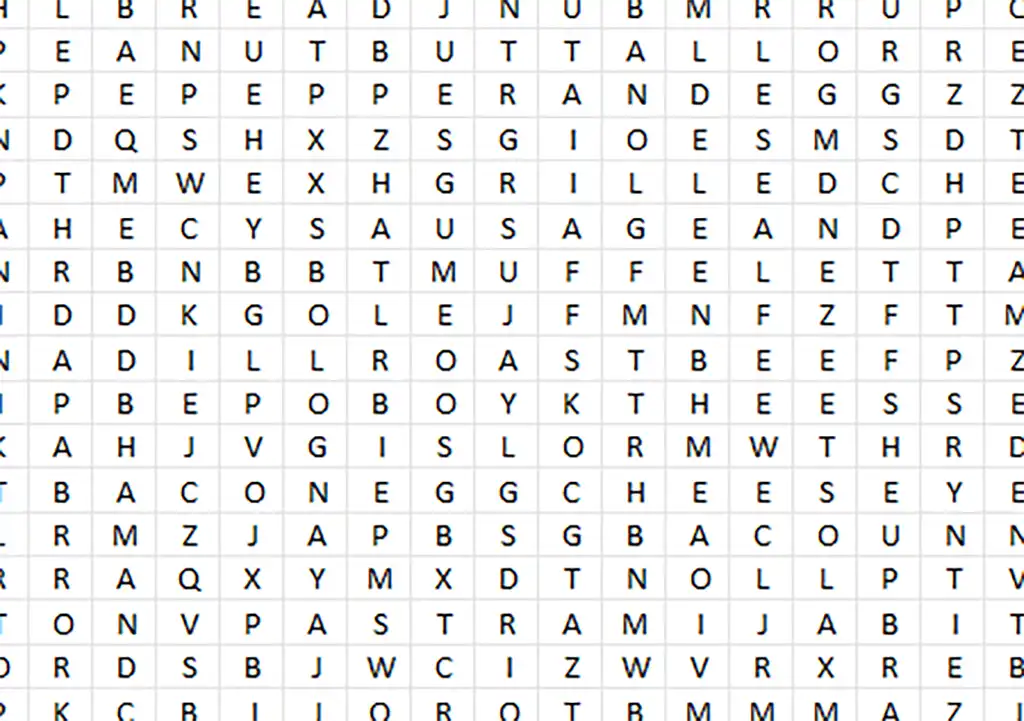
One of the best things about word search puzzles is their universal appeal. From a curious six-year-old just learning to read to a sprightly ninety-year-old who loves a good mental challenge, these puzzles truly have something for everyone. There aren’t many activities that can bridge such a wide generational gap, but word searches manage to do it effortlessly.
For kids, word searches are an engaging way to build foundational language skills. I remember when my niece—she was about seven at the time—got hooked on animal-themed word searches. Every time she found a word like “giraffe” or “elephant,” she’d light up as if she’d just cracked a secret code. What she didn’t realize was that she was also improving her spelling and pattern recognition while having fun. Teachers love them, too—they’re often used in classrooms to reinforce lessons on vocabulary or specific themes, like holidays or science topics.
Teenagers and young adults can benefit as well, especially when the puzzles are tailored to their interests. My cousin once gifted me a word search book themed around my favorite TV show (this was before apps made everything so easy). I didn’t think much of it at the time, but those puzzles helped me unwind during stressful finals week. It’s proof that even older kids and young adults can appreciate word searches as a low-pressure way to relax while staying sharp.
For adults, word searches are a handy tool to sneak in some “me time.” Life gets hectic—work deadlines, bills to pay, laundry piling up—but spending just 10 minutes on a word search can feel like hitting the reset button on your brain. Plus, it’s a great alternative to screen time when you’re looking to unplug for a bit. And let’s not forget their role in learning—if you’re picking up a new language or brushing up on forgotten vocabulary, themed word searches can make the process far more enjoyable.
Now, for the seniors—word searches are an absolute gem. They’re not only entertaining but also a practical way to keep the brain active. My grandmother used to solve them religiously every morning with her cup of coffee. She always said it was her way of “keeping the cobwebs out.” And she wasn’t wrong! Studies suggest that word-based puzzles can help with memory retention and slow cognitive decline, making them an ideal activity for older adults.
What makes word searches so inclusive is their flexibility. You can choose puzzles that are simple and colorful for kids or dive into intricate grids with advanced vocabulary for a real brain workout. They’re portable (a book, a printout, or even an app will do), require no special skills, and are a great way to bond across generations. I’ve had family game nights where we competed to see who could finish their word search fastest, and let me tell you—it was a riot.
So, whether you’re a kid discovering the joy of language, a busy adult needing a break, or a senior looking to stay sharp, word searches fit the bill. They’re proof that some of the best things in life are simple, accessible, and ageless. Just another one of the benefits of word search puzzles.
Enhancing Problem-Solving and Critical Thinking Skills
If you’ve ever solved a tricky word search puzzle, you know that it’s more than just a game—it’s a mental workout in disguise. At first glance, these puzzles might seem straightforward: find the words, cross them off, move on. But the truth is, they’re quietly sharpening your problem-solving and critical thinking skills with every grid you tackle.
Take a moment to think about the process of solving a word search. It starts with scanning the letters and understanding the “rules of the game.” Words could be horizontal, vertical, diagonal, or even backward. You’re essentially solving a little mystery: where are the words hiding? This requires observation, strategy, and logical thinking—key ingredients for problem-solving. For me, the “aha” moment often comes when I spot a pattern I hadn’t noticed before, like how letters cluster together in certain ways. It’s oddly satisfying, almost like cracking a code.
What’s cool about word searches is that they teach you how to approach challenges systematically. Let me give you an example. When I was younger, I used to dive into puzzles without much of a plan, which led to a lot of frustration. Over time, I developed a strategy: start with the unique words (like “zebra” or “quartz”) and cross them off first, then work on the trickier ones. Applying a methodical approach not only made solving easier but also taught me the value of breaking big problems into smaller, manageable steps—a skill I’ve carried into other areas of life, like tackling work projects or even DIY home repairs.
Word searches also force you to think critically. Let’s say you’re looking for the word “moon,” but the grid is jam-packed with random M’s and O’s. Your brain has to sift through the noise, connect the right sequence, and eliminate distractions. It’s not just about finding the word—it’s about training your mind to focus, filter information, and make decisions based on patterns and logic. These are skills that translate beautifully to real-world scenarios, whether you’re troubleshooting a technical issue, planning a vacation, or brainstorming solutions at work.
Another unexpected bonus? Word searches can improve your adaptability. Every puzzle is different, which means you have to adjust your approach based on its difficulty level, word placement, and even the theme. Some puzzles throw curveballs, like words that overlap or share letters with others. These moments teach you to stay flexible, think on your feet, and come up with creative solutions—a handy mindset for navigating life’s curveballs, too.
Want to level up your critical thinking skills even more? Try creating your own word search. I’ve done this a few times, and let me tell you, it’s harder than it looks. You have to think strategically about word placement, avoid obvious patterns, and challenge yourself to make the puzzle engaging yet solvable. It’s like being a puzzle designer and problem-solver all in one.
So, the next time you’re working on a word search, remember: you’re not just finding hidden words. You’re building problem-solving muscles, fine-tuning your logic, and training your brain to tackle challenges with confidence. It’s proof that even the simplest activities can have a profound impact when you look beneath the surface.
The Social Aspect of Word Search Puzzles
Who says word search puzzles have to be a solo activity? While they’re often thought of as a quiet, individual pastime, they can actually bring people together in some surprisingly fun and meaningful ways. In fact, I’ve had some of my favorite moments bonding with family and friends over word searches—it’s amazing how a simple grid of letters can spark connection.
Family game nights are the perfect example. My family has a competitive streak (maybe too competitive), and one night someone had the bright idea to print out identical word search puzzles for everyone. We turned it into a race to see who could finish first. It was chaotic—in the best way. There was laughing, groaning, and the occasional “Wait, that’s MY word!” yelled across the table. Even my younger cousins, who usually zone out on their phones, got completely hooked. It became one of those rare moments where everyone—from grandparents to teenagers—was genuinely engaged and having fun together.
Classrooms and group settings are another great place for the social side of word searches to shine. Teachers often use them as a collaborative activity, asking students to work in pairs or small groups to complete a puzzle. I once saw this in action during a volunteering gig at a local after-school program. The kids were huddled together, pointing at the paper, debating whether “eagle” was hidden diagonally or not. They were practicing teamwork without even realizing it—problem-solving, communicating, and celebrating every time they found a word. It was like sneaky, brain-boosting socialization.
Let’s not forget how word searches can build community in more unexpected ways. A friend of mine organizes weekly meetups at the local library, and one time they set up a “puzzle night” where people worked on word searches and crosswords together. It turned out to be a great icebreaker—strangers became teammates, swapping tips and chatting as they puzzled away. There’s something about working toward a common goal, even as simple as finishing a word search, that naturally brings people closer.
If you scroll through TikTok, you’ll likely stumble upon videos of people racing against the clock to solve word searches. The format is simple but thrilling: creators showcase close-ups of their puzzles and challenge their audience to beat their completion time. Some add quirky edits or upbeat music to keep viewers engaged. It’s become a fun, interactive trend, and let me tell you—watching someone circle words like “pineapple” at lightning speed is oddly satisfying. Plus, these challenges often spark friendly competition in the comments, where users post their own times or claim they’ve found the words faster.
Another fascinating aspect of TikTok’s puzzle community is its diversity. You’ll see creators customizing word searches to fit themes that resonate with their followers—whether it’s pop culture references, nostalgic throwbacks, or inside jokes from their communities. One creator I came across made word searches based on trending TV shows, inviting their audience to “find the fandom Easter eggs.” These personalized puzzles aren’t just fun—they’re a way to build bonds over shared interests.
TikTok has also helped word searches evolve into group activities. Many creators host virtual challenges where their followers participate in live streams, solving puzzles in real time. It’s not uncommon to see comments like, “I found ‘summer’ before the timer ran out!” or “Where’s ‘sunflower’? I can’t find it!” This live interaction makes solving puzzles feel like a collaborative effort, even if you’re sitting on your couch
And honestly, they’re just great for starting conversations. I’ve handed puzzles to coworkers during lunch breaks, and they’ve sparked everything from “What’s the longest word you can think of?” to wild debates over whether words like “supercalifragilistic” should even exist. Whether you’re solving together or talking about the words themselves, puzzles have this unique way of fostering connection and fun.
So, next time you think of word searches as a solo pursuit, consider this: they’re also a ticket to shared laughter, teamwork, and even a little friendly competition. Whether you’re racing your siblings to find “pineapple,” helping a child learn new words, or bonding with your book club over a puzzle night, word searches prove that simple activities can create lasting memories.
The Benefits of Word Search Puzzles
Word search puzzles are more than just a fun pastime; they’re a tool for boosting mental health, learning, and connection. Whether you’re young or old, they offer a unique blend of challenge and relaxation. Ready to sharpen your mind and have some fun? Grab a puzzle and start reaping the benefits today!