TED Games: Smart Play That Makes You Think
When most of us think of TED, we picture inspiring talks or animated science videos. But TED has quietly entered the gaming space with a series of thoughtful games. Their aim? To create “smart games” that illustrate ideas and build reasoning skills, not just kill time . Puzzle lead Alex Rosenthal says each design has a “beating heart of an idea” . The result is a surprising collection of daily brain teasers, a mobile word puzzle, and even an epic jigsaw/escape‑room hybrid. After trying them all, here’s what stood out.
The Purring Test: Can an AI Cat Help You Guess the Word?
Imagine playing Pictionary with a feline professor who can draw, write poetry and answer riddles. That’s essentially The Purring Test. Each day you get three secret words and invited to ask Professor Purring for clues. You can tell the AI cat to sketch something, write a poem or answer a straightforward question . The drawings are delightfully weird because the underlying generative AI sometimes hallucinates . One day my prompt “write a poem about a spicy fruit” returned a cat‑penned limerick about pineapples wearing chili hats.
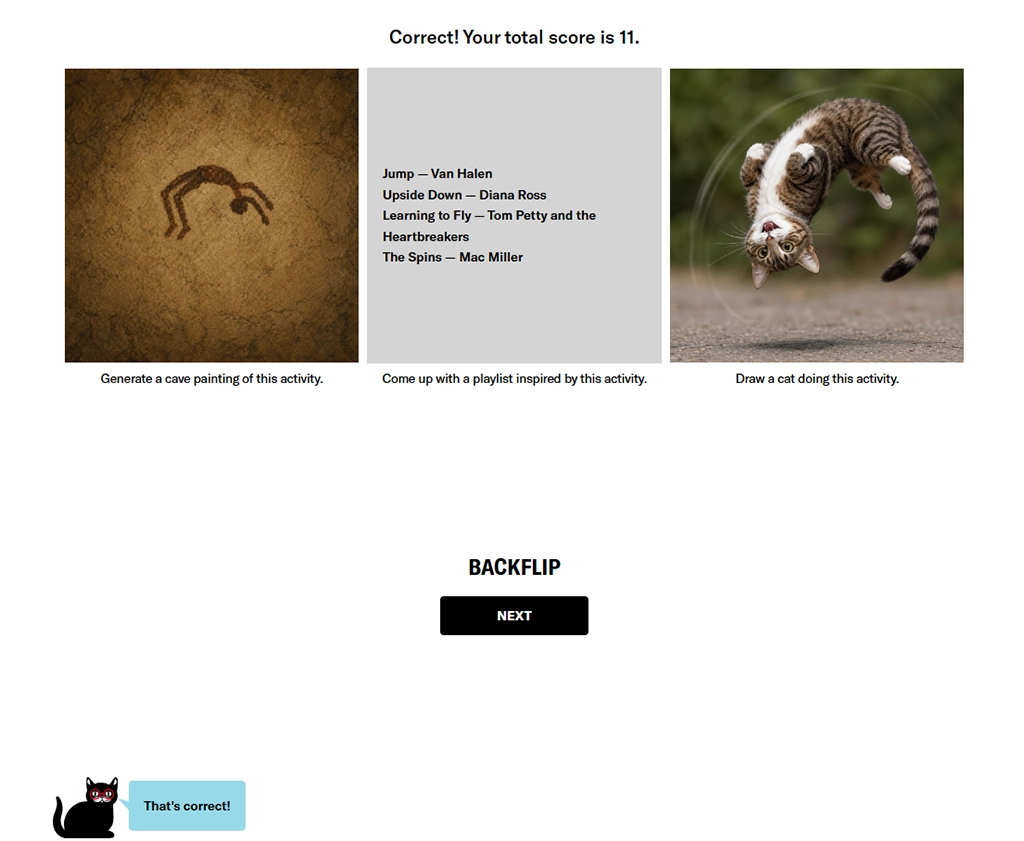
The game’s rhythm is simple: ask for clues, make a guess and see if your streak continues. There’s only one puzzle per day, so it becomes a quick morning ritual rather than a binge session . What I like most is how it demystifies AI. When Professor Purring produces an offbeat poem or a surprisingly accurate sketch, you can sense both the strengths and limitations of generative models . It’s also fun to compare streaks with friends. The downside? Finish the three words and that’s it until tomorrow. As a playful coffee‑break activity, though, it hits the mark.
Rating: ★★★★☆ – charming, quirky and over too quickly.
Letter Brew: Word Ladders Meet Potion Crafting
If The Purring Test is about conversation, Letter Brew is about transformation. Each web‑based puzzle feels like brewing a potion: you’re given a series of word clues and asked to change one letter at a time until the answer emerges. Puzzle author Sandy Weisz calls it a blend of “potion crafting, linguistic transformations and aha moments” . You might start with CROW and, by changing one letter at a time based on clues, end up with PROW. Solving all the mini puzzles reveals a final word .
What elevates Letter Brew is the ritual of combining your answers to spell something new. After piecing together four or five transformations, you scramble the resulting letters to uncover a final target . When the final word clicks, it’s satisfying in the same way finishing a crossword feels. The interface features bubbling cauldrons and mystical sound effects, which add to the potion‑making vibe. The instructions could be clearer for first‑time players, and difficulty sometimes swings because puzzles are written by different creators. Overall it’s a clever warm‑up for crossword or Spelling Bee fans.
Rating: ★★★★☆ – a thoughtful word game with occasional ups and downs.
Tumblewords: Swipe, Slide and Spell With TED Trivia
Tumblewords was originally part of Netflix Games but it’s been re‑released as a standalone mobile app . It takes the concept of sliding letter tiles—imagine Boggle mashed up with a Rubik’s Cube—and infuses it with TED trivia . On your phone, you swipe rows and columns to align letters and connect them into words . Special tiles grant bonus points and longer chains bring bigger scores . Each game lasts just a few minutes, making it perfect for quick breaks .
The educational twist is brilliant: every puzzle is themed around a TED topic, such as “Science in Movies” or “Psychology of Superstition” . Clear a grid and you unlock a fact card tied to the subject . Daily modes like Daily Ladder, Daily Six and Daily Match provide varied challenges . You can even play head‑to‑head matches or invite a friend . There are minor drawbacks—categories sometimes repeat and the original Netflix version disappeared—but the current app is stable and the trivia keeps things fresh. I’d love an archive to revisit unlocked fact cards.
Rating: ★★★★★ – addictive, educational and easy to pick up.
Pandora’s Legacy: A Jigsaw Escape‑Room Adventure
TED‑Ed’s most ambitious game isn’t digital at all. Pandora’s Legacy is a sprawling boxed experience that combines a 1,200‑piece jigsaw puzzle with escape‑room style puzzles . You start by assembling part of the puzzle, then solve a riddle hidden in the artwork and enter the answer into a companion app to unlock the next set of pieces . The story casts you as Pandora, trying to contain the chaos she unleashed with help from (and interference by) Olympian gods . Each numbered jigsaw piece or artifact you find leads to more puzzles , and there are 17 boxes to open and 16 puzzles to solve .
Expect this to be a commitment: the full experience takes 12–15 hours and is best shared with two to four people . The production quality is high; artwork by Senne Trip and puzzle design by Rita Orlov make each section feel special. It’s pricey at around US $79, and shipping may be limited depending on your region, but you’re getting an entire escape room in a box. The digital companion provides hints if you get stuck. If you love narrative puzzles and have the time to immerse yourself, Pandora’s Legacy is a spectacular journey.
Rating: ★★★★☆ – immersive and lavish, but demands time and space.
Final Thoughts
TED Games shows that brainy fun doesn’t have to be dry. From AI cats that write poems to potion‑like word ladders, sliding letter cubes with trivia and an epic mythological jigsaw, each game aims to spark curiosity rather than fill empty minutes . The Purring Test and Letter Brew are delightful daily rituals, Tumblewords is the standout mobile experience, and Pandora’s Legacy proves that tabletop games can still surprise. Whether you’re looking for a quick brain teaser or a weekend‑long adventure, TED’s growing catalogue offers thoughtful alternatives to typical puzzle apps.
Overall rating: ★★★★☆ – smart, innovative and worth adding to your game rotation.