
Coloring pages for mindfulness are designs you use while intentionally paying attention to the present moment. Instead of worrying about finishing the picture, the focus is on the movement of your hand, the colors you choose and the small section in front of you.
That is what separates mindful coloring from simply coloring while watching TV or scrolling on your phone. The finished artwork matters less than the experience.
Mindfulness usually involves noticing what is happening right now without judging it. Coloring gives your mind something simple and physical to focus on. You can notice the lines, shapes, colors and movement of the pencil or marker.
Mindfulness coloring pages can feature almost anything. Mandalas and geometric patterns are popular, but they are not the only option. Nature scenes, cozy rooms, animals, flowers and bold and easy designs can work just as well.
I prefer choosing a page that feels inviting rather than challenging. If a design looks exhausting before you even start, it probably will not make a very relaxing activity.
Try starting with one coloring page and five colors. Pick one small section and begin. That is really all you need.
How Mindful Coloring Helps You Stay in the Present Moment
The mind wanders. That is normal.
Mindful coloring simply gives you something to return your attention to. When you notice yourself thinking about tomorrow’s errands, work or something that happened earlier, bring your focus back to the page.
Notice the pencil moving across the paper. Pay attention to the color appearing inside the shape. Listen to the sound your marker or pencil makes.
You can also notice your body. Are your shoulders tense? Are you squeezing the pencil harder than necessary?
Relax your grip and continue.
I find it easier to focus on one small area rather than thinking about the entire coloring page. Pick a leaf, flower, window or piece of clothing and stay with that section.
The goal is not to completely empty your mind. Some coloring sessions will feel calm. Others might feel restless.
Both are okay. The practice is simply noticing when your attention wanders and gently bringing it back.
Potential Benefits of Mindfulness Coloring
One reason coloring pages for stress relief have become popular is because they are easy to start. You do not need special training or expensive supplies.
You just need a page and something to color with.
Coloring may help create a short break from screens, work and daily responsibilities. For a few minutes, your main decision might simply be whether a flower should be blue or purple.
That kind of structured creative activity can feel refreshing.
Mindful coloring may also encourage focused attention. You choose colors, follow shapes and keep returning your attention to the page when your thoughts wander.
It can also provide creative self-expression without the pressure of staring at a blank sheet of paper.
I do think it is important to keep the claims realistic. Coloring does not cure anxiety, eliminate stress or replace professional mental health care.
Think of mindful coloring as one possible wellness activity. If it helps you slow down and enjoy a few quiet minutes, that alone makes it useful.
How to Choose the Best Mindfulness Coloring Pages
The best mindfulness coloring page is the one you actually want to color.
Start by considering how much time and energy you have. A complicated mandala might be fun during a long weekend session but frustrating during a ten-minute break.
Bold and easy coloring pages work well when you want something simple. Large spaces, thick outlines and closed shapes make them especially comfortable for markers.
More detailed adult coloring pages may work better when you enjoy slowly layering colors or spending longer on one design.
The subject matters too. Nature coloring pages, flowers, animals, ocean scenes and cozy illustrations are all good options.
I would not choose a page just because it looks impressive online. Your mindful coloring session does not need to look like someone else’s finished artwork on social media.
Pick something that makes you want to sit down and start.
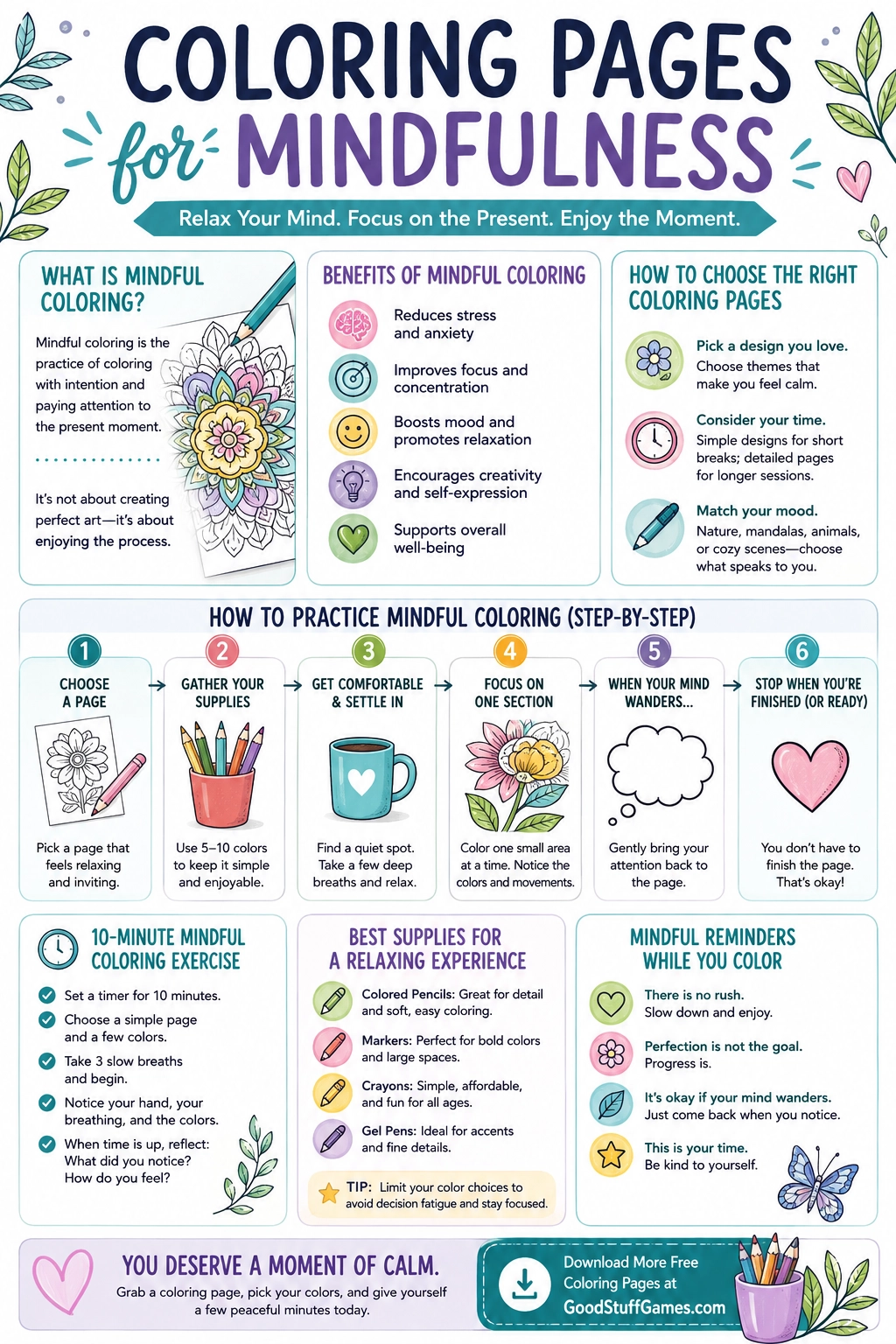
How to Practice Mindful Coloring Step by Step
You do not need a complicated routine to practice mindful coloring.
Start by choosing one page. Try not to spend 20 minutes looking for the perfect design.
Next, gather five to ten colors. A smaller palette keeps you from getting stuck trying to decide between dozens of nearly identical shades.
Sit somewhere comfortable and remove easy distractions. Put your phone facedown or silence notifications if you can.
Take two or three slow breaths before beginning.
Choose one section and start coloring. Pay attention to the pressure of your hand, the movement of the coloring tool and the way the color looks on the paper.
When your thoughts wander, notice it and return to the page.
Every few minutes, check your shoulders and hands. Relax anything that feels tight.
You also do not have to finish the picture. Stop when your coloring break is over and return another day.
Try This 10-Minute Mindful Coloring Exercise
Ten minutes is a good starting point because it is long enough to settle into the activity without taking over your day.
Choose a simple coloring page and three to five colors. Set a timer for ten minutes.
Take three slow breaths before beginning.
Start coloring one section. Notice the movement of your hand, the sound of the pencil or marker and the color appearing on the page.
When your attention wanders, simply return to what you are coloring.
Halfway through, check your body. Relax your shoulders and loosen your grip if necessary.
When the timer ends, stop. You do not need to finish the section.
Ask yourself two simple questions:
What did I notice while I was coloring?
How do I feel compared with when I started?
You do not have to feel completely relaxed for the exercise to be worthwhile. Even ten minutes of focused creative time can provide a useful break from the rest of the day.
Mindful Coloring Prompts to Use While You Color
A mindful coloring prompt is simply a question that helps you pay attention to what you are doing.
I suggest choosing one prompt per coloring session. Too many questions can turn relaxation into homework.
Try asking:
What colors am I drawn to today?
How does the pencil or marker feel in my hand?
Am I pressing lightly or firmly?
Where am I holding tension?
What sounds can I hear right now?
Is my breathing slow or fast?
Can I let this page be imperfect?
What happens when I slow down?
One of my favorites is, “Can I let this page be imperfect?”
Markers sometimes cross lines. Colors occasionally look different than expected. That is part of coloring.
If a prompt starts distracting you, forget about it and color quietly. Mindful coloring should feel helpful, not like another task you have to complete correctly.
The Best Supplies for a Relaxing Coloring Session
You do not need professional art supplies for mindful coloring.
Colored pencils are good when you want control and softer color. They also work well on basic printer paper.
Markers are great for bold coloring pages because they fill larger spaces quickly. Just place scrap paper behind the coloring page since some markers can bleed through.
Crayons are another simple option. They are inexpensive, easy to use and take away some of the pressure to make everything look perfect.
Gel pens work well for small details and accents, although they may need extra drying time.
I also recommend limiting your color palette. Five or six colors can be easier to work with than staring at a giant marker case.
Keep your coloring supplies together in a small basket or container. When everything is easy to grab, you are much more likely to actually use it.
When to Add Mindful Coloring to Your Daily Routine
Mindful coloring does not need to become a big daily ritual.
Start with five or ten minutes.
You could color while drinking your morning coffee, during a lunch break, after work or before bed.
After work can be especially useful because it creates a small transition between work responsibilities and the rest of the evening.
You might also try coloring after a stressful task or long period of screen time. It will not make the problem disappear, but it can give your attention something completely different to focus on.
Pairing coloring with an existing habit can make it easier to remember. Leave your supplies near the place where you normally drink coffee, read or relax.
And do not worry about coloring every single day. This is supposed to be a relaxing activity, not another streak you have to maintain.
Use it when it helps.
Mindfulness Coloring for Adults, Teens and Children
Mindful coloring can work for different ages, but the page should match the person using it.
Adults may enjoy detailed nature scenes, cozy coloring pages, animals or geometric patterns. Others may prefer bold and easy designs that can be finished in shorter sessions.
Teens may enjoy fantasy scenes, abstract patterns, nature designs or illustrations connected to their interests.
For younger children, choose large shapes, bold outlines and familiar subjects. Keep the session short and simple.
A parent or teacher might ask one question such as, “What color are you choosing?” or “Can you feel the crayon moving across the paper?”
The activity should also be voluntary. Forcing someone to color as a way to “calm down” can quickly make the activity feel like punishment.
The goal is simply to provide a creative activity that encourages a little focused attention and quiet time.
Is Mindful Coloring the Same as Art Therapy?
No. Mindful coloring and art therapy are not the same thing.
Coloring at home can be relaxing and personally meaningful, but that does not automatically make it therapy.
Art therapy is a professional mental health practice provided by trained art therapists. It combines art-making with established therapeutic methods.
That distinction is important when talking about the benefits of coloring.
It is reasonable to say that coloring may encourage relaxation, focused attention or creativity. It is not accurate to say that a printable coloring page cures anxiety, treats depression or heals trauma.
I prefer thinking of mindful coloring as a simple wellness activity.
Use it because you enjoy slowing down, choosing colors and spending a few minutes away from your screen. Those benefits are worthwhile without calling the activity therapy.
Common Mindful Coloring Mistakes to Avoid
One of the biggest mistakes is trying to make the page perfect.
Suddenly, a relaxing coloring break turns into 15 minutes of deciding which shade of blue belongs on a tiny flowerpot.
Pick a color and start.
Another mistake is comparing your page with artwork you see online. Many of those pages were created with expensive markers, advanced techniques and hours of work.
Your ten-minute coloring break does not need to look like that.
Choosing a page that is too detailed can also create frustration. When you are tired or short on time, try a bold and easy design instead.
Avoid multitasking too much, too. Watching TV, answering messages and coloring at the same time makes it harder to focus on the present activity.
Finally, remember that you do not have to finish the page.
Three colored shapes can still count as a successful mindful coloring session.
Download Free Coloring Pages for Mindfulness
One of the easiest ways to start mindful coloring is to keep a few printable pages ready to go.
At GoodStuffGames, I share free printable coloring pages along with other puzzles and creative activities. You can print a page at home and use colored pencils, crayons or markers.
[Download Free Coloring Pages]
Standard printer paper works well for pencils and crayons. If you use markers, place scrap paper underneath or choose heavier paper that your printer can handle.
You can also print the same page more than once and try different color combinations.
Keep several printable coloring pages in a folder with your favorite supplies. When you want a quick creative break, you will not have to spend time searching for something to color.
GoodStuffGames also shares new free puzzles and coloring activities regularly, including Sudoku, word searches, mazes and coloring pages.
[Subscribe for New Free Printables]
Then choose a page, grab a few colors and give yourself ten quiet minutes.
It really can be that simple.
Frequently Asked Questions About Coloring Pages for Mindfulness
- Can coloring really be a mindfulness activity?
- Yes. Coloring can become a mindfulness activity when you intentionally focus on the present moment.
- Pay attention to the colors, lines, hand movements and physical sensations while you color. When your mind wanders, gently return your attention to the page.
- How long should a mindful coloring session last?
- Start with five to ten minutes.
- Longer sessions are fine if you are enjoying yourself, but there is no required amount of time.
- Are simple or detailed coloring pages better for mindfulness?
- Either can work.
- Simple pages are useful for shorter, low-pressure sessions. Detailed coloring pages may work better when you enjoy longer periods of focused coloring.
- Choose the style that feels relaxing to you.
- Do I need special coloring supplies?
- No.
- Colored pencils, markers or crayons are enough. Use whichever supplies feel comfortable and work well with your paper.
- Can I listen to music while coloring?
- Absolutely.
- Soft music or nature sounds may help some people relax. Others prefer silence.
- Try both and see which one helps you stay focused on the activity.
- Do I need to finish the coloring page?
- No.
- Mindful coloring focuses on the experience, not completing the entire picture.
- Stop whenever you are ready and return to the page later.
- Can children use mindfulness coloring pages?
- Yes.
- Choose age-appropriate designs with large shapes and simple outlines. Keep the activity short and avoid putting pressure on the child to finish the page.
- Are mindfulness coloring pages art therapy?
- No.
- Art therapy is a professional mental health service provided by trained art therapists. Mindful coloring at home is better described as a creative wellness or relaxation activity.