
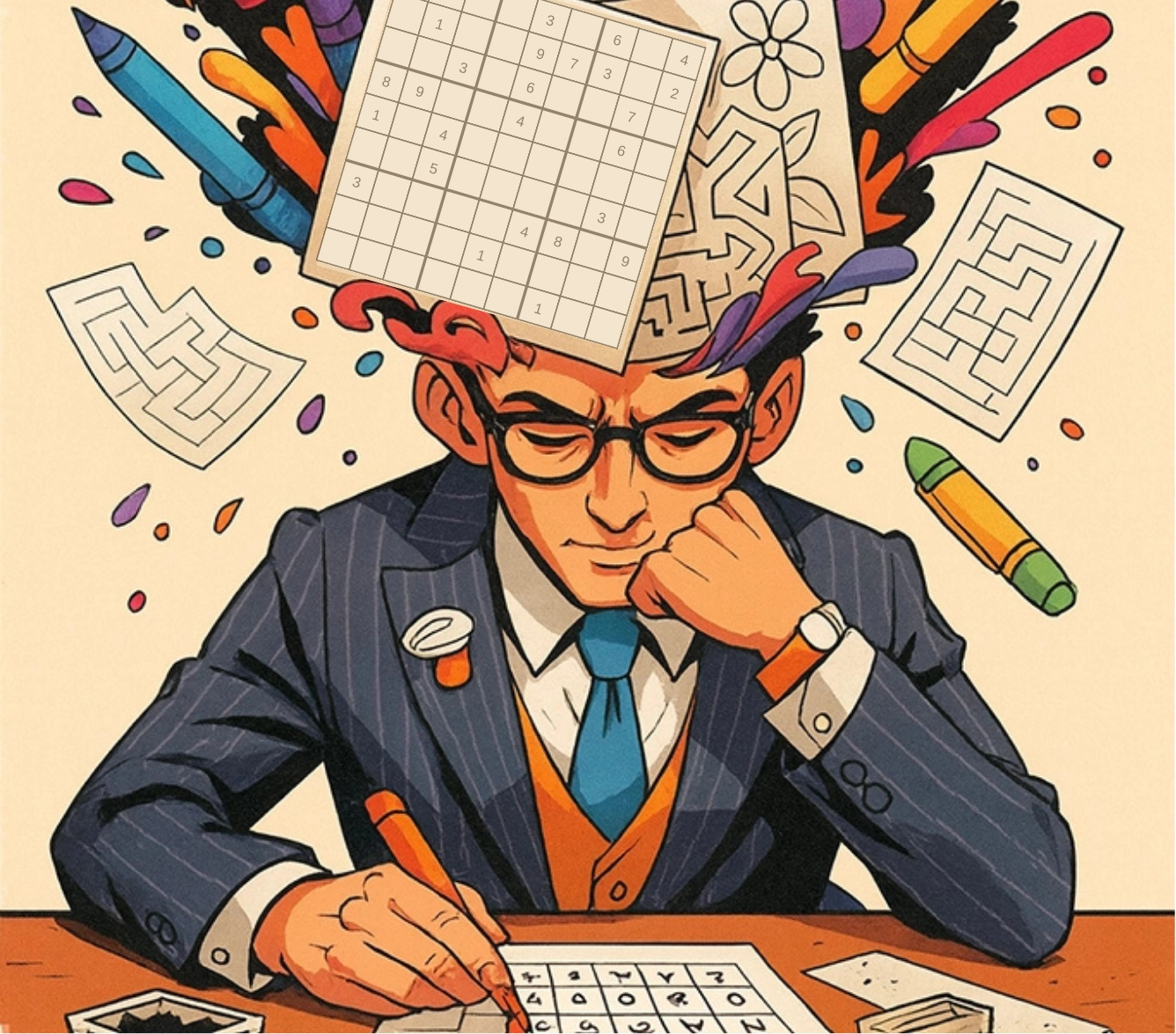
If you’ve ever walked into a room and thought, Why did I come in here again? then yeah, you’re in good company. I’ve been there more times than I want to admit. That’s actually what pushed me into taking brain exercises for adults seriously instead of just laughing it off as getting older.
What I learned pretty quickly is that brain health isn’t just something to care about later. The way we use our mind today affects how sharp, focused and confident we feel in the next few years. The good news is, you don’t need a laboratory or a fancy subscription or hours of free time to do it. Simple daily brain exercises for adults can fit into real life, even a busy, messy one.
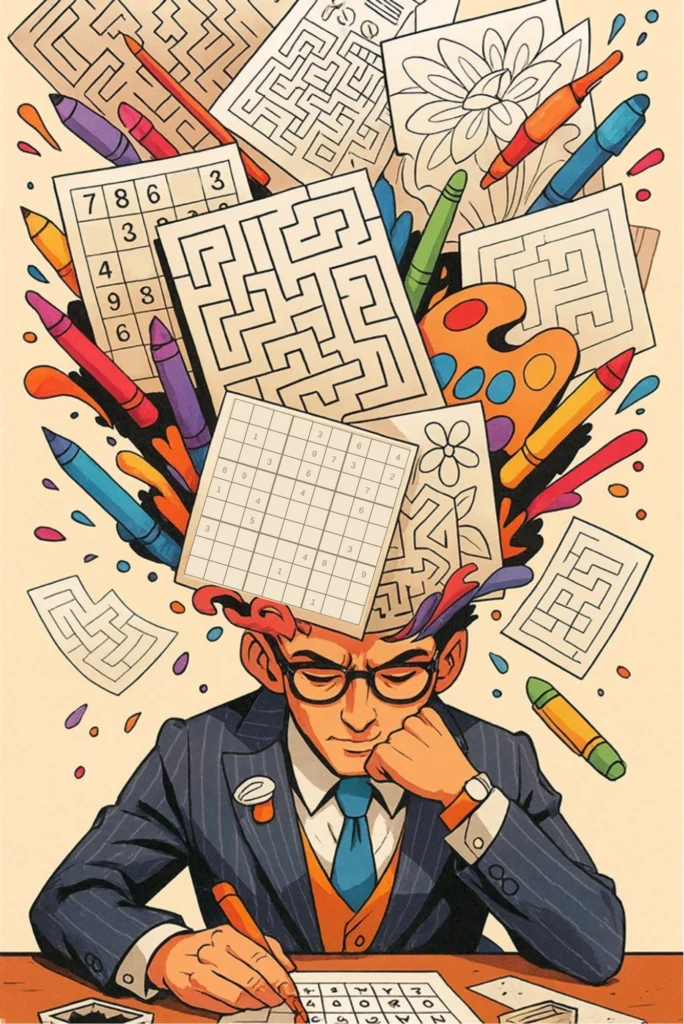
In this post, I’ll share what’s actually worked for me. It was puzzles, memory drills, tiny 5 minute routines and a few lifestyle tweaks that make everything more effective. I’ll also talk about what didn’t work, because there were plenty of false starts. Think of this as a friendly guide from someone who’s tried a lot of brain exercises for adults and finally found a rhythm that sticks.
What Are Daily Brain Exercises for Adults?
When I first started hearing about brain exercises for adults, I pictured something like mental pushups with a stopwatch. Very intense, kind of exhausting. Over time, I realized that daily brain exercises are just small, consistent activities that make your brain think on purpose instead of drifting on autopilot all day.
For me, that started with swapping my morning social scroll for a quick word puzzle. A 10 minute crossword instead of checking every notification. It doesn’t sound like much, but it turned into a little daily brain workout that made it easier to focus once the real workday started.
I think of brain exercises as anything that makes you solve, remember, or learn. That can be Sudoku, word searches, memory games, or even learning new words in another language. When adults do these things regularly, they’re basically telling their brain, Hey, stay sharp, I still need you to show up.
One mistake I made at the beginning was trying to find the perfect brain exercise. I spent way too long comparing apps, puzzle types and research instead of just starting. Real progress happened when I picked a few activities I enjoyed and did those daily. Not perfect, just consistent.
And that’s really the core idea. Daily brain exercises for adults should be simple, intentional mental challenges that fit into your actual life. Not the ideal life you wish you had. The one with meetings, laundry, interruptions and all.
Science Backed Benefits of Daily Brain Exercises
I’m not a scientist, but I do like reading studies and then testing the ideas on myself like a little experiment. When I dug into the research on brain exercises for adults, one phrase kept popping up, “cognitive reserve.” Basically, the more you challenge and use your brain over time, the more backup it seems to build.
The first benefit I noticed in my own life wasn’t huge, but it was real. My focus improved. I used to bounce between emails, tabs and messages, forgetting what I was doing halfway through. After a few weeks of daily brain workouts like logic puzzles and memory drills, I could stay with one task longer without feeling like my brain was trying to escape.
There’s also evidence that consistent cognitive exercises can support memory, attention and processing speed as we age. No, it’s not a miracle cure and it doesn’t replace medical care. But for many adults, daily brain exercises might help slow down some of the fog that can creep in when we stop challenging ourselves mentally.
I remember one stressful week where I skipped my brain routine completely. By the end of that week my mind felt scattered, like everything took more effort. Going back to my simple exercises, one puzzle, one short memory drill. It made me feel more grounded again. Small, yes, but noticeable.
And honestly, the emotional benefits are underrated. Finishing a tricky puzzle or beating your previous score in a brain game gives you a little win for the day. That tiny feeling of “hey, I did something hard” builds confidence over time. It’s not just about brain health. It’s about how you feel about yourself.
Best Types of Daily Brain Exercises for Adults
When I tried to design the perfect routine, I overloaded it and dropped it in a week. What finally worked for me was choosing a few types of brain exercises and rotating them so my brain didn’t get bored. That’s a big lesson with brain exercises for adults. Variety keeps you going.
Puzzles and games are my foundation. Sudoku for logic and pattern recognition. Word searches, crosswords, or anagram games for vocabulary and language skills. Those are my easy to grab options when I only have a few minutes but still want a real mental workout.

Then there are memory exercises. These are more practical than they sound. Things like trying to memorize a short grocery list or remembering three important tasks for the day without checking my notes. Name face practice is another good one. Repeating someone’s name in my head and trying to recall it later.
Focus and attention drills are especially helpful if you feel scattered. One simple trick is setting a 10 minute timer and doing a single, slightly challenging task with zero interruptions. No phone, no extra tabs, no just checking messages. It’s uncomfortable at first, but it really does teach your brain to stay put.
Finally, I like to include creative thinking. Journaling, sketching from memory or writing a short story prompt. Those activities push the brain to make new connections instead of running the same old loops. When you mix puzzles, memory drills, focus training and creative work, you get a balanced set of brain exercises for adults that actually feels interesting.
Simple 5-10 Minute Brain Exercises You Can Do Every Day
For a long time I told myself, “I just don’t have time.” Then I actually checked how much time I lost to random scrolling and, well… that excuse didn’t hold up. That’s when I started hunting for 5-10 minute brain exercises I could slide into my day without blowing up my schedule.
My favorite morning habit is a small puzzle with my coffee. Nothing huge. One quick Sudoku, a short word search, or a mini crossword. It’s enough to nudge my brain awake without feeling like another task on my todo list. That tiny daily habit has done more for my focus than any productivity hack I tried.
Another easy one is a memory snapshot. I pick a moment from the previous day and try to remember as many details as possible. The sounds, colors, what I was wearing, what someone said. It’s a simple memory exercise that makes you more present in your life, too.
During breaks, instead of grabbing my phone, I sometimes do micro mental challenges. Things like listing as many animals that start with a certain letter as I can in one minute. Or adding up prices in my head instead of relying on a calculator. Little cognitive drills like that count as brain exercises for adults just as much as app-based games.
In the evening, I try to keep it low key and screen free. That might be a short logic puzzle from a book, reading a slightly challenging article, or doing a tiny recall exercise like “name three good things that happened today.” On really tired days, that’s all I do and that’s okay.
The key is consistency, not perfection. Five focused minutes of brain work every day beats thirty minutes once a month. Those minutes stack up over time and that’s where you really start to feel your brain getting sharper.
Puzzle Based Brain Exercises (Word Games, Sudoku, Logic)
I’m biased, but puzzles are where brain exercises for adults start to feel actually fun. There’s something satisfying about filling in that last square or finally solving a clue that stumped you. That little spark of “yes!” is what keeps me coming back.
Sudoku is my go to for logical thinking and pattern recognition. I started with the easy ones and honestly felt a little silly at how long they took me. But after doing one almost every day, I noticed I could see the patterns faster and make decisions with less hesitation. That same kind of thinking showed up later when I was solving real life problems, which was a nice bonus.
Word games are great if you love language. Crosswords, word searches, anagram puzzles, Scrabble style games. They all work different parts of your brain. I had a phase where I played a word game app for about ten minutes each night. Over time I noticed my writing got a tiny bit sharper. I reached for stronger, clearer words without forcing it.
Logic puzzles, like grid puzzles and riddles, can be humbling at first. The first few I tried made me feel like I had no idea how to think. But sticking with them taught me patience and how to hold multiple clues in my head at once. It’s like strength training for reasoning.
If you’re tired of screens, grab puzzle books. Keep one in your bag, another by your bed. That way, when you have a spare 5-10 minutes, you’ve got a brain exercise ready that doesn’t involve more blue light. The trick is to choose puzzle difficulty that stretches you just a bit, not so hard that you want to throw the book across the room.
Memory Exercises for Better Recall and Focus
I didn’t start memory training because I wanted to compete in a memory championship or anything like that. I started because I was tired of forgetting small but important things, like what someone just told me or the one item I went to the store to buy. That’s when I added memory-focused brain exercises for adults to my routine.
One of my favorites is the grocery game. Before I head to the store, I pick 5-7 items and try to memorize them using a quick story or visual image. Maybe I imagine them all stacked in a funny scene. At the store, I see how many I can recall before checking the list. It’s simple, but it works.
Name recall is another powerful exercise. When I meet someone new, I repeat their name in my head a few times and try to use it again in the conversation. Later that night, I see if I can remember the names of people I interacted with. It forces my brain to actually pay attention to that detail instead of letting it slide away.
I also tried a basic memory palace method with everyday info. I’d picture a familiar place and put things I wanted to remember in different spots. At first it felt clunky and slow. But with time, it got smoother and even when I didn’t use a full memory palace, my ability to visualize details improved.
The mistake I made early on was going too big, too fast. I tried to memorize long lists and quotes and just burned out. Daily memory exercises work best when they’re small and woven into your life. Recall three things from a meeting, list yesterday’s meals, try to remember three headlines you read. Over time, that steady repetition really does make recall and focus feel stronger.
Digital Brain Training Apps vs. Screen-Free Options
I definitely went through the download every brain app phase. My phone was full of icons promising better memory, faster thinking and higher scores. Lumosity, Peak, Elevate, I had them all. Just having them there made me feel productive, which is kind of funny, since half the time I didn’t open them.
On the plus side, brain training apps make brain exercises for adults super convenient. You can do a quick session in line, in the waiting room, or during a break. Many of them have streaks, levels and little charts to show you how your attention or memory scores are changing. That kind of feedback can be really motivating.
But after working on a screen all day, my eyes and brain were not thrilled about more pixels. I also caught myself opening an app with good intentions and then detouring straight into email or social media. The tool was there, but the distraction was too.
That’s where screen free brain exercises came in. Puzzle books, decks of cards, journaling and reading became my offline training tools. A Sudoku book by the bed. A small logbook where I’d write a quick memory or focus exercise. These analog options reduced screen fatigue and still gave me a strong daily brain workout.
These days, I use a mix. One or two brain apps I actually like, in short bursts. The rest of the time, I lean on physical puzzles, handwritten lists and real-world memory games. That balance keeps me consistent without feeling burned out on screens, which is a big deal for long term routine.
Lifestyle Habits That Boost the Effects of Brain Exercises
Here’s something I wish someone had told me at the start. You can’t make up for poor sleep and nonstop stress with more puzzles. I tried. It did not work. Brain exercises for adults work a lot better when your basic lifestyle habits aren’t completely falling apart.
Sleep was the first big one I noticed. On nights when I got decent rest, my puzzles felt doable and even enjoyable. On nights when I stayed up late scrolling or working, the same puzzles took longer and came with more mistakes. My brain just didn’t have the energy for focused thinking.
Food and hydration matter too. I’m not here to hand out strict diet rules, but I can tell you this, on days when I drank enough water and ate actual meals instead of just coffee and snacks, my focus during brain exercises was noticeably better. My thoughts felt clearer, not as fuzzy.
Movement plays a quiet but huge role. Even a 20-minute walk made my brain feel more awake and less tense. On days when I combined light exercise with my mental routines, I had more stamina for both. It’s not about turning into a fitness fanatic. It’s about giving your brain decent blood flow and oxygen.
Stress is the other big piece. On heavy stress days, hard logic puzzles felt like torture. So I started counting gentle things as part of my brain routine too. Doing breathing exercises, very easy puzzles, short mindfulness breaks. It still counts as brain work, just with a softer edge.
When you put it all together sleep, food, movement, stress management, your brain exercises for adults become way more effective. You’re not fighting your body. You’re supporting it so the mental training can actually stick.
How to Build a Sustainable Daily Brain Exercise Routine
I’ve lost track of how many times I’ve said, “This time I’m really sticking to this routine.” Then a busy week hits, everything collapses and I’m back to nothing. The turning point came when I stopped trying to build an impressive routine and started building a realistic one.
Step one was starting small. Smaller than I was comfortable with, honestly. One puzzle a day. That’s it. Not five exercises, not thirty minutes, just one piece of brain training for adults that I could finish in 5-10 minutes. The habit was more important than the size of the workout.
Habit stacking helped a ton. Instead of looking for a new time slot, I attached brain exercises to things I already did. One puzzle with morning coffee. One memory drill while brushing my teeth at night. A quick attention exercise during my mid day break. That made it harder to “forget,” because it was tied to routines that already existed.
I also learned to allow flexible difficulty. On good days, I’ll do a medium or hard puzzle. On rough days, I’ll grab an easy word search or just do a three item recall drill and call it enough. The rule is something is always better than nothing. That mindset kept me from giving up completely when life got messy.
The biggest shift was focusing on long term consistency, not short-term intensity. A sustainable routine of small, daily brain exercises for adults beats a hardcore plan that you abandon in a week. If you can find the version of this that you can keep going on a bad day, you’ve probably found the right level.
Daily Brain Exercises for Different Life Stages and Goals
One of the nicest things about brain exercises for adults is how adaptable they are. You don’t need the same routine at 25 that you do at 65 and that’s okay. The core idea stays the same, but the goals and tools shift.
If you’re a busy professional, you might use brain exercises to fight distraction. Short logic puzzles between meetings, a focus timer while writing, or memory drills tied to client names and details. In that case, your brain training is really about productivity and staying sharp on the job.
For older adults, the focus is often on staying engaged and confident. I’ve seen family members who love doing crosswords, large print word searches, or simple card games. The goal isn’t speed; it’s enjoyment and regular mental stimulation. Social games, like group trivia or card nights, add a connection piece that helps mood and brain health at the same time.
Students and lifelong learners might lean on memory and comprehension exercises. Things like spaced repetition, recall notes and summarizing what they just read are all brain exercises that directly support their study goals. They’re not doing puzzles just for fun (though that helps), they’re using brain training to hold onto important information.
For people dealing with burnout or high stress, intense cognitive training is usually not the answer. Gentle, low pressure activities work better, simple puzzles, calm reading, short journaling sessions, or basic memory games. The goal there is to re-engage the mind without making it feel like another test to pass.
So when you set up your own routine, think less about what other people do and more about what you need. Your age, your energy levels, your stress, your goals. Brain exercises for adults should serve your life, not the other way around.
Signs Your Daily Brain Exercises Are Working
Everyone wants to know, Okay, but is this actually doing anything? And I get it. You don’t get a blinking sign telling you your brain just leveled up. With brain exercises for adults, progress shows up more quietly.
For me, the first hint was in conversation. I stopped losing my train of thought so often. I could actually finish stories without that wait, what was I saying? moment. That alone made the daily brain exercises feel worth it.
I also noticed I could read longer without zoning out. Tasks that required focus, like writing or planning, felt slightly less draining. Not perfect, not suddenly easy, just a bit smoother. That bit is what you’re looking for at first. Small but real changes.
Inside the exercises themselves, progress is easier to see. Sudoku levels that used to feel impossible started to feel manageable. I moved from easy to medium puzzles and survived. In word and memory games, I finished levels faster, made fewer mistakes and could recall more details. Those are clear signs your brain training is having an effect.
I started jotting down little wins: Finished medium Sudoku in 12 minutes, or Remembered all 7 items from list. Seeing those on paper helped a lot on days when I doubted myself. It’s hard to argue with a growing list of I did it moments.
Of course, if you notice serious issues like major confusion, getting lost, or big changes in your thinking, that’s not a do more puzzles signal. That’s a talk to a doctor signal. Brain exercises for adults are a helpful tool, not a replacement for professional care.
But if you’re noticing more focus, better recall and more confidence over time, that’s a strong sign your daily brain routine is doing its job. The trick is giving it enough time to work and not quitting just because you don’t see dramatic changes in the first week.
Start Small, Stay Curious, Keep Your Brain In The Game
If there’s one thing I’ve learned from playing with all these brain exercises for adults, it’s this, you don’t need a perfect plan, just a real one. A plan you can actually live with on a busy Tuesday, not just on an ideal Sunday.
A few minutes of puzzles, a simple memory game, a short focus drill and some basic habits like sleep and movement can add up to real changes in how sharp and steady your mind feels. You don’t have to overhaul your whole life. Just nudge your brain a little bit every day.
So here’s your challenge, pick one small brain exercise you’re willing to try today. Maybe a quick Sudoku, a 5 item memory list, or a ten minute reading session without distraction. Do it again tomorrow. And the next day. Give your brain a chance to show you what it can still do.